All work

Case study — Marketing operations

A managing director's LinkedIn voice, kept consistent without a marketing hire.

A busy MD had decades of industry knowledge and a distinctive way of talking about it, but no time to post and no budget case for a full-time marketer. I built a system that drafts posts in his voice, lets him approve them in minutes, and publishes them on schedule.

Client
Frasers Office Supplies
My role
Discovery, strategy, design, build
Built with
Lovable, Supabase, Claude, Make
Status
In active use
0:00 2:58

The problem

The knowledge was there. The consistency wasn't.

The managing director of a fourth-generation family business knows his industry inside out and has a genuine, recognisable voice. What he doesn't have is a spare hour to write LinkedIn posts, and at his company's size, hiring a marketer to do it isn't an easy budget decision.

On LinkedIn, consistency is what builds visibility, and consistency is exactly the thing a busy owner can't sustain by hand. Posts happen in bursts, then go quiet for weeks.

Generic AI writing wasn't an option either. If the posts didn't sound like him, they'd chip away at his credibility rather than build it. Anything that went out had to be unmistakably his.

What I built

Draft, approve, publish — in his voice.

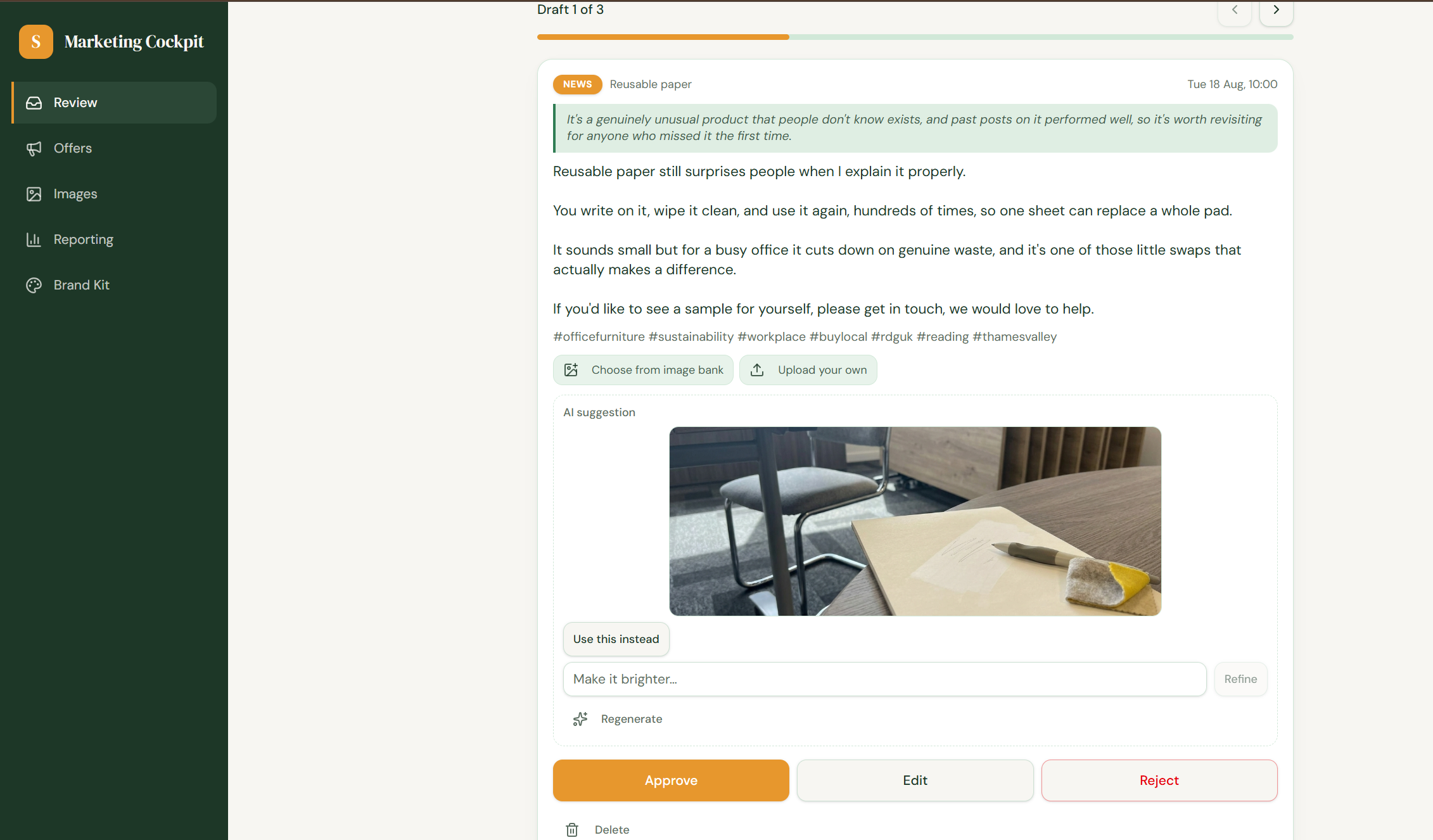
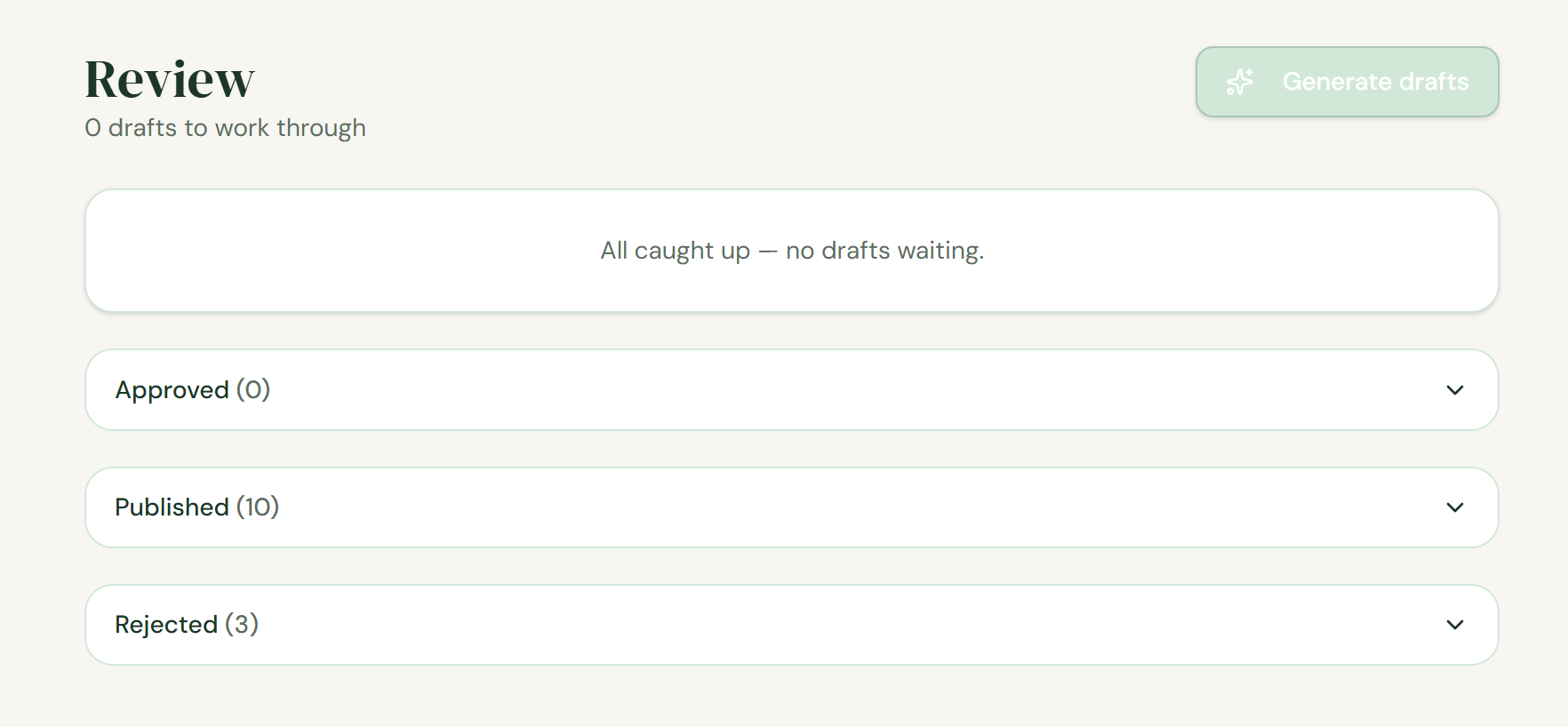
Four steps. The heavy lifting is automated, but the MD holds the pen: nothing publishes until he's approved it. The screen where he does that is the real product.
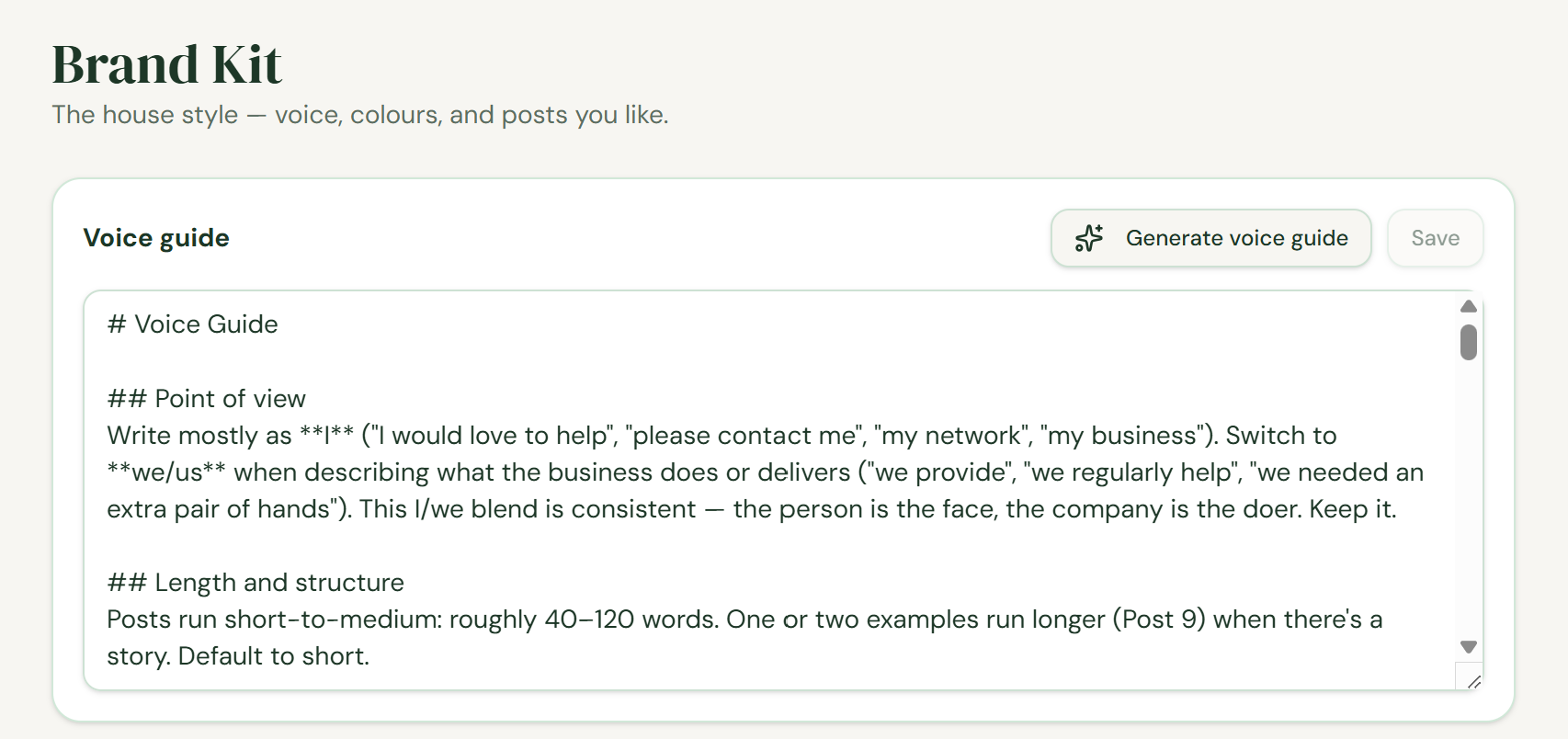
Marketing Cockpit voice guide interface
1

Voice guide

A one-off deep read of his real posts builds a reusable voice profile: tone, sentence rhythm, vocabulary, and the phrasing he avoids. It's stored once and every future draft is written against it, so nothing comes out sounding generic.
How it works

The moving parts, in plain terms.

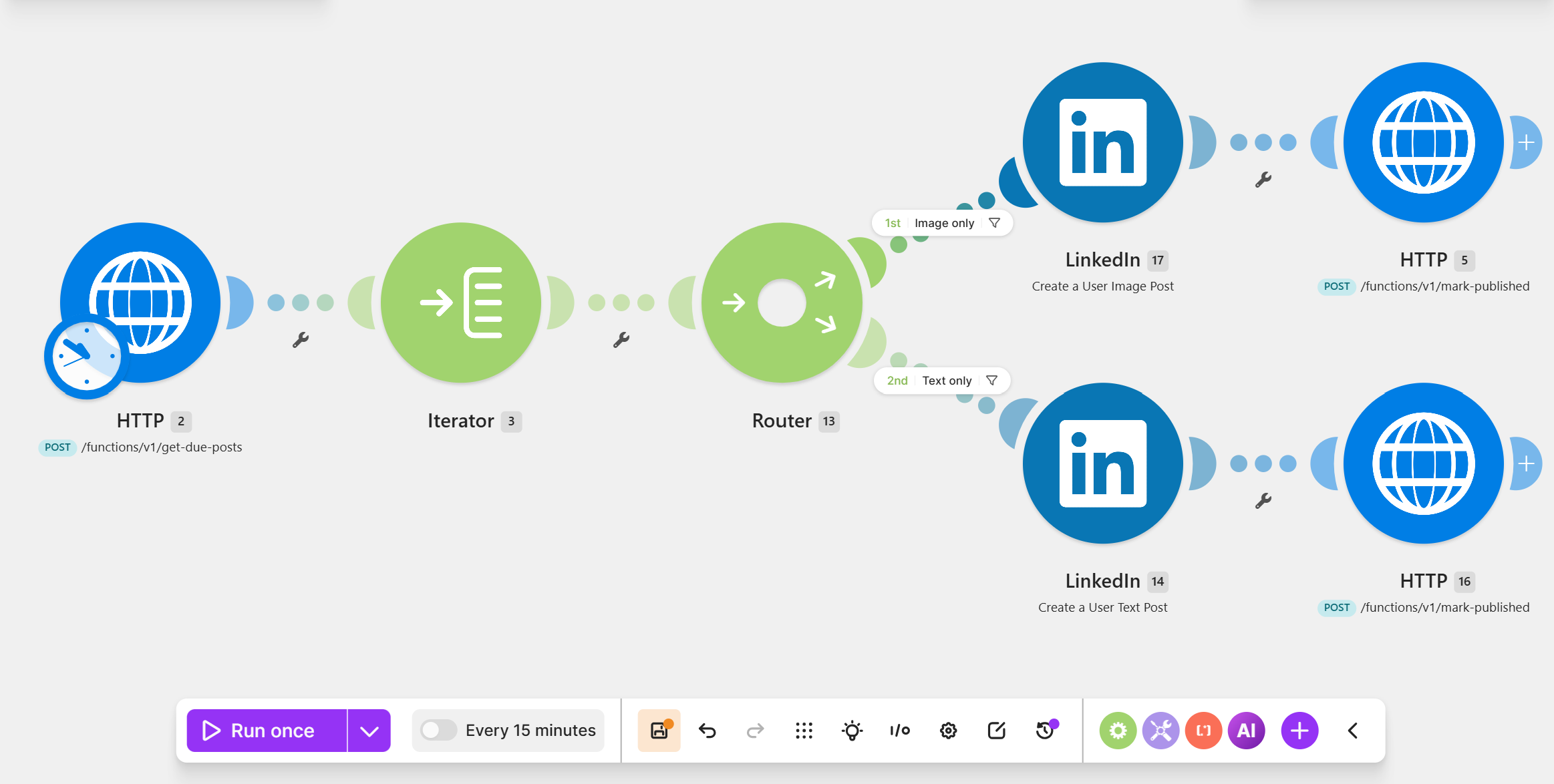
A drafting layer writes, the MD approves in the cockpit, and an automation layer handles images and publishing. Two design choices are worth pulling out.

Interface
Approval cockpit
Where the MD reviews and approves drafts.
Draft
AI drafting
Writes posts matched to his voice profile.
Store
Database
Holds drafts, approvals, and the schedule.
Publish
Automation
Adds branding and posts to LinkedIn.

Two AI models, matched to the job. A heavyweight model builds the voice guide once, because getting the voice right is worth the extra cost. A faster, lighter model writes the ongoing daily drafts. Expensive tool for the one-off deep work, efficient tool for the repeating work.

His name, his call. Every post goes out under Nick's name, so the risk isn't a bad automation, it's a bad post with his name on it. The cockpit exists so the one thing he can't delegate never gets delegated.

Decisions & trade-offs

The judgment calls behind it.

Reframed from visibility to enquiries

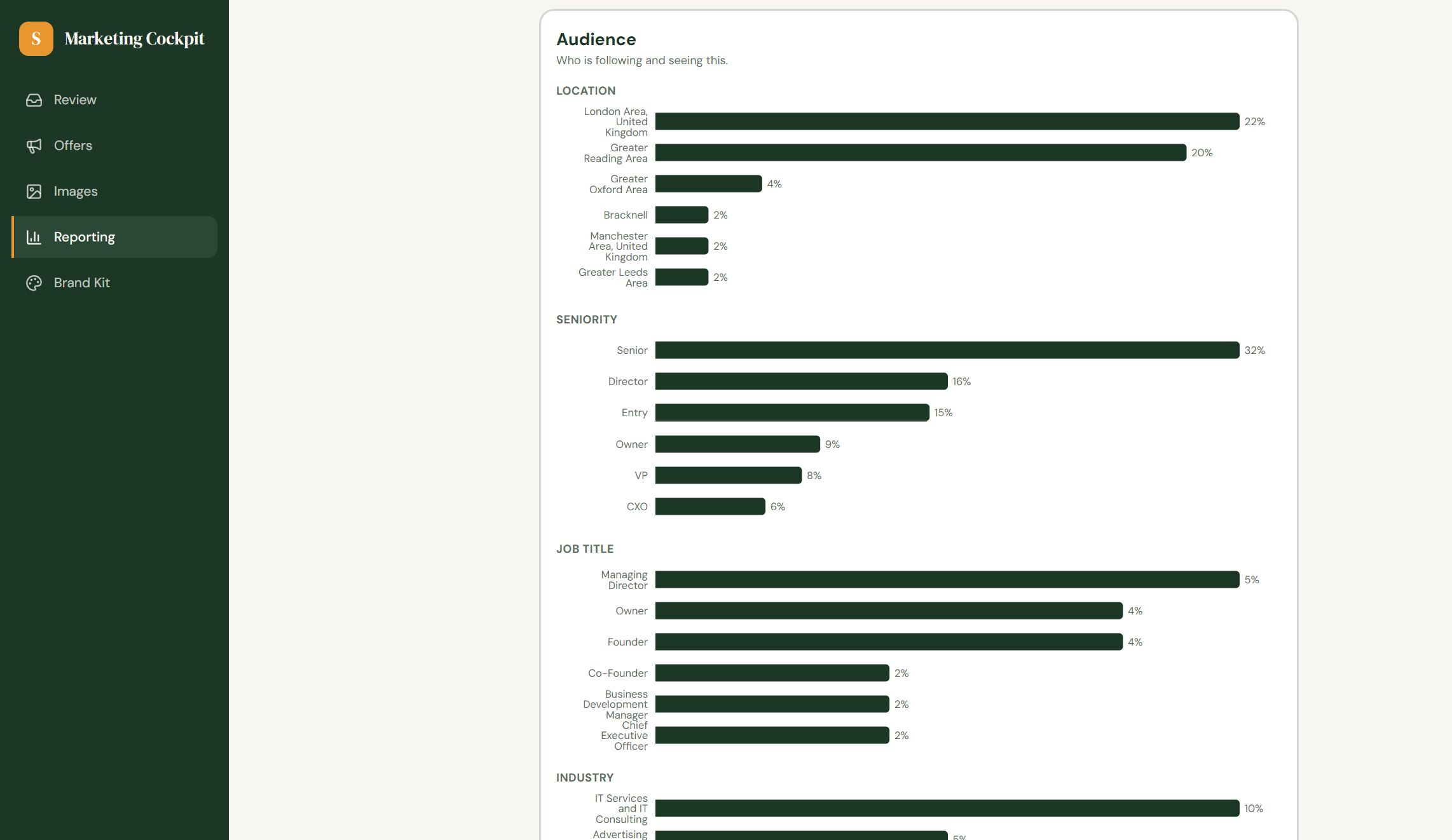
It started as a visibility tool: post more, get seen more. Talking it through with Nick, his actual goal was never likes, it was enquiries. LinkedIn doesn't hand you enquiry numbers, so we agreed to track engagement and visibility as the proxy. That one conversation changed what the tool was built to do.

Moved topic picking out of the AI's hands

Early drafts kept circling back to the same two or three themes, since the model was choosing topics as it wrote. The fix was to stop asking the AI to pick and handle topic rotation in code instead, excluding anything used recently before the AI ever sees the brief. Less clever, more reliable, which is what mattered here.

Voice guide before any drafting

The voice guide exists so drafts sound like Nick, not like generic AI. That's what protects his credibility on posts going out under his name, and it's why he can approve a draft as is instead of rewriting it every time.

The cockpit is the deliverable

The backend plumbing matters, but the only part Nick actually sees is the approval screen. So that's where most of the design effort went. A tool people enjoy using gets used. A clever backend behind a clunky screen just gets ignored.

What's next

Presence, then reach, then growth.

The build is sequenced in three tiers, each one proven before the next is added, rather than everything at once.

Tier 1

Presence

Consistent, voice-matched LinkedIn posting the MD approves in minutes.

Live
Tier 2

Reach

A blog engine, with the same content repurposed across email and LinkedIn.

Next
Tier 3

Growth

A sandbox holding the business context, for brainstorming marketing ideas and generating the content for them on request.

Concept